
Ai WeiWei
Art as Activism

This week Trump is trying to influence what the Smithsonian can exhibit. The African American History Museum is part of the Smithsonian, as are other culturally crucial institutions. Which implies art scares wanna-be dictators.
A new exhibit at the Seattle Art Museum is titled AI REBEL: The Art and Activism of Ai Weiwei. So naturally I had to go. I mean, I’m writing about Creative Courage, and here is a man who is labeled an activist on billboards. I fact, I had to go twice. I went once with a friend and again on my own. I might go a few more times. I felt confused, awed, amazed, and fascinated all at once. By the work, and by the artist and what his work illuminated about the world. Seeing Ai WeiWei’s work made me bigger.
Ai’s material is anything he finds in the world. His mediums include paint, bicycle frames, shoes, antiques, children’s building bricks, documentary video, ancient pottery, and more. He comments on power, modernity, transformation, injustice, migration…..and what he calls ‘human unconsciousness.’
I’ll talk about three of the many things I discovered and hope that at least some of you can attend the exhibit, which runs through September 7th.
I am a bicyclist. An installation of Chinese “Fortune” brand bicycles centers the exhibit; attached one to another in ways that defy use while creating fascinating shapes. The strange assemblage caught me off-guard – a normal thing, perhaps the most common form of transportation in the world, turned strange. The bicycles might be taking off, might be moving in a circle, might be dreams or freedom, or indeed, fortune.
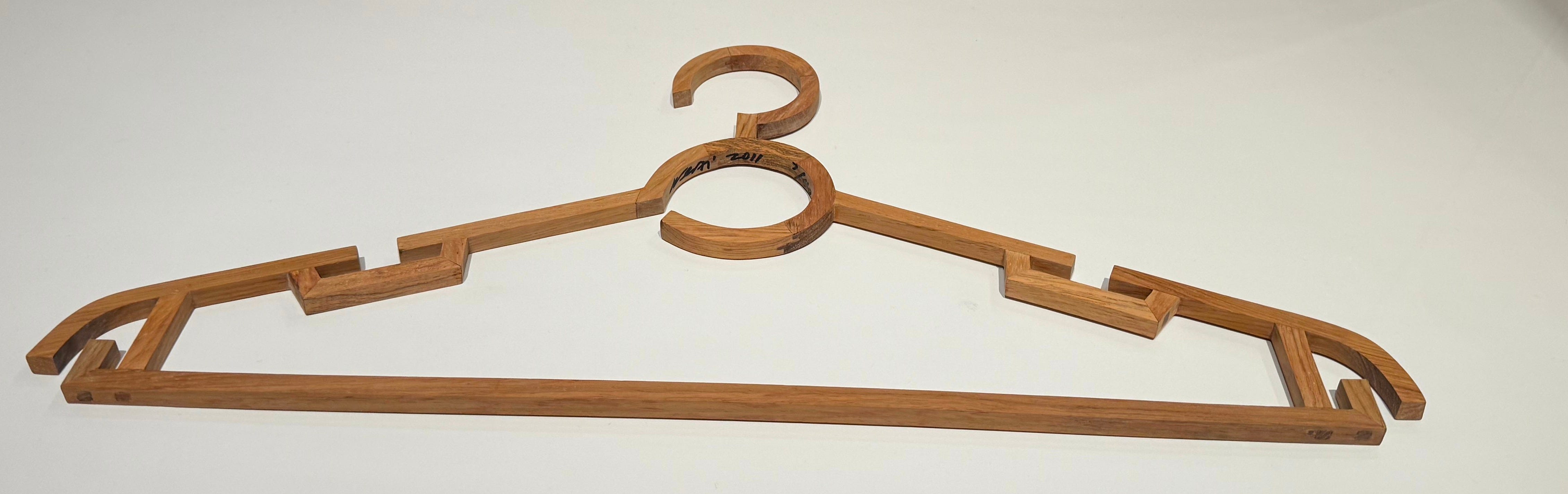
In 2011, WeiWei was captured while using the Beijing airport as a transfer and ended up in prison for 81 days. The exhibit includes a room set to mirror his actual cell. During his time in prison, he was able to obtain one thing for himself; a hangar. So now, outside of prison, he has recreated both the prison and the hanger as art. The first time through I passed by the prison room without seeing it, and the hanger didn’t catch my attention for more than a few seconds. This is, perhaps, emblematic of what we miss. Ai made a video which you can watch at the museum which is a commentary on that time. It’s irreverent with striking images and few words. Maybe none in English. I’d have to go watch it again to catch that detail. See? It’s an act of unfolding to get at what he makes available to us.
Shoes greet visitors, tucked one into the other and coiled into a tight spiral. Ordinary objects, again, turned to something completely unusable but interesting. This impacted me on its own, and more so because I have been to the holocaust museum and walked past the vast pile of shoes that were worn by people on their way into the concentration camps on Germany. In another exhibit (not currently at SAM), WeiWei used shoes worn by immigrants on their way to safety.
If you are in the Pacific Northwest, I recommend going to SAM to see the exhibit. If you go, pay attention to the wallpaper….
Maybe more than once. For those of you who aren’t, I’ve left a few links for you below.
Weiwei’s work reminds me that art is elevated and nuanced speech, and that art has power. And that we must retain our ability to see art of all kinds.
Please leave any comments you’d like below.
Thanks for the very good article. I especially appreciated the connection you made between the bicycle installation and ideas of movement, freedom, and transformation. It made me want to see the exhibit for myself or maybe more than once, just like you did.
And btw, since you are interested in collective action and power, I would love to hear your thoughts on a video post I made about a concept app I designed that would allow online communities to earn money and use it collectively.
The link to the post is:
https://substack.com/@simpofhumanprogress/note/p-160770924?r=42g2sa